
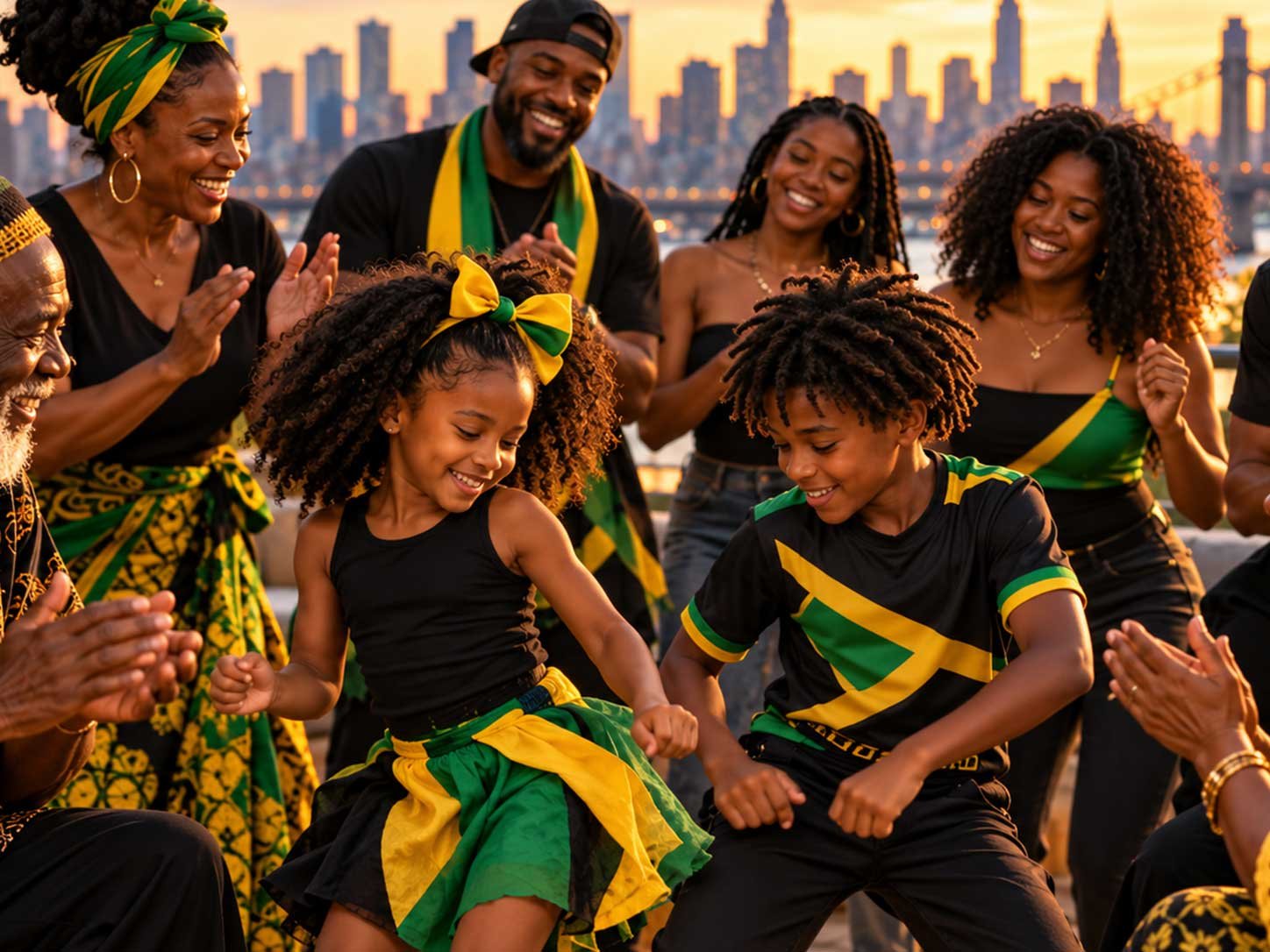
You do not have to be born in Jamaica to feel Jamaican.
Across cities such as London, Toronto, Miami and New York, generations of children have grown up hearing stories about Jamaica from parents and grandparents.
They may have been born thousands of miles away, but Jamaica remains present in their homes, their food, their music, their language and their identity.
This next generation is helping Jamaican culture travel further than ever before.
Jamaica Begins at Home
For many children of Jamaican parents, their first experience of Jamaica does not happen at an airport.
It happens around the dinner table.
Rice and peas on Sunday.
Curry goat at a family gathering.
Ackee and saltfish for breakfast.
Jerk chicken at a backyard cookout.
Sorrel at Christmas.
Food becomes one of the first ways Jamaican culture is passed from one generation to another.
Then there are the expressions.
Parents and grandparents continue using Jamaican sayings and patois, sometimes producing the interesting situation where a child raised overseas understands far more patois than they are willing to speak.
The culture survives through everyday family life.
Music Creates Another Connection
Jamaica’s musical influence has travelled almost everywhere.
Reggae, dancehall, ska and other Jamaican sounds have become part of global popular culture.
For younger generations of Jamaicans overseas, music provides another connection to their heritage.
They may listen to contemporary Jamaican artists alongside the musicians their parents and grandparents played.
Different generations may prefer different sounds, but the connection remains.
Music has become one of Jamaica’s strongest cultural bridges between the island and its global community.
Returning Home Matters
For many diaspora families, bringing children to Jamaica is an important tradition.
It allows younger generations to meet relatives, visit communities they have heard about and experience the country beyond photographs and social media.
Suddenly the stories become real.
The road their grandmother talked about exists.
The community their father grew up in has a name and a location.
The food tastes different.
The accent sounds familiar.
For some young people, those visits create a connection that lasts for the rest of their lives.
Jamaican Identity Is Changing
The global Jamaican identity is also evolving.
Someone can be Jamaican and British.
Jamaican and Canadian.
Jamaican and American.
These identities do not necessarily compete with each other.
Instead, younger generations often combine them.
That produces new music, businesses, fashion, food and creative ideas influenced by both Jamaica and the countries where they were raised.
Jamaican culture continues to evolve because each generation adds something while carrying parts of the previous generation forward.
Technology Keeps Jamaica Close
Previous generations of migrants relied heavily on letters and expensive international telephone calls.
Today, Jamaica is only a video call away.
Young Jamaicans overseas can watch Jamaican news, follow local creators, listen to Jamaican radio, participate in social-media conversations and communicate with family members instantly.
This constant connection makes it easier for Jamaican culture to remain part of everyday life.
Distance no longer creates the same cultural separation it once did.
The Next Generation Matters
The future of Jamaica’s relationship with its diaspora will eventually depend on people who may never have permanently lived on the island.
Keeping them connected is therefore important.
That means creating more opportunities for cultural exchange, heritage tourism, education, internships, business investment and meaningful experiences in Jamaica.
Because being Jamaican has never been only about where someone lives.
It is also about the culture they carry.
And across the world, a new generation continues to carry Jamaica with them.